
Last updated on December 18, 2025
By Alexandra Grima, Michael Rupert, Will Austin, Sarah Creasy, Tanner Wilde, Alex McDaniel
Power electronics is a complex subject that can feel intimidating at first glance: fast switching, nonlinear behavior, magnetics, thermal limits, and control theory all interacting at once. In this course, however, students discover that these systems can be understood when they’re taught with clarity, structure, and real-world grounded practice. With original lectures, purposeful visuals, and expert explanations from Dr. Fred Barlow, the course guides students from basic converter categories through advanced topics such as control of switch-mode power supplies and power assembly design.
ELE 3430 blends theory, analysis, and applied engineering tasks so that students learn how to think like power electronics engineers. Each module builds toward practical competence, supported by synchronous sessions, scaffolded assignments, and robust simulation practice.
Contents
Electrical Engineering Made Simple
Course Showcase Video
Showcase Examples
Instructor-Developed Content and Expert Explanations
One of the defining strengths of ELE 3430 is the depth and clarity of its technical content. Rather than relying solely on textbook material, this course features original lecture videos, diagrams, readings, and explanations created by Dr. Barlow, who draws directly from extensive professional experience. Complex topics, such as switching dynamics, magnetic behavior, switch-mode power supplies, inverter control, and thyristor conduction, are broken into digestible segments with clear reasoning and purposeful visuals.
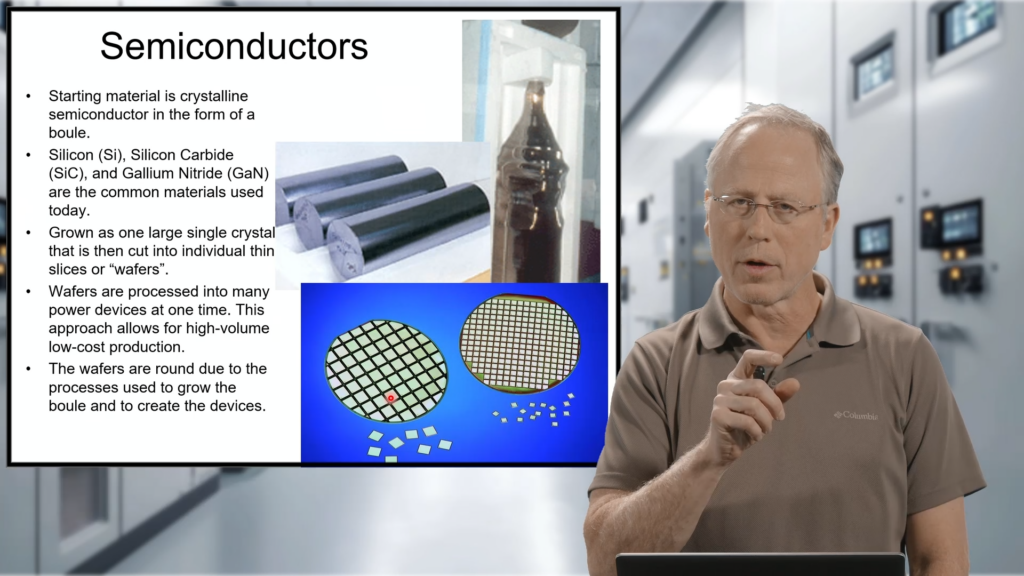
Students benefit from the authentic engineering insight that bridges theoretical models with how real converters behave in practice. This expert-driven approach gives this course a level of authenticity and rigor that elevates students’ understanding beyond formula memorization.
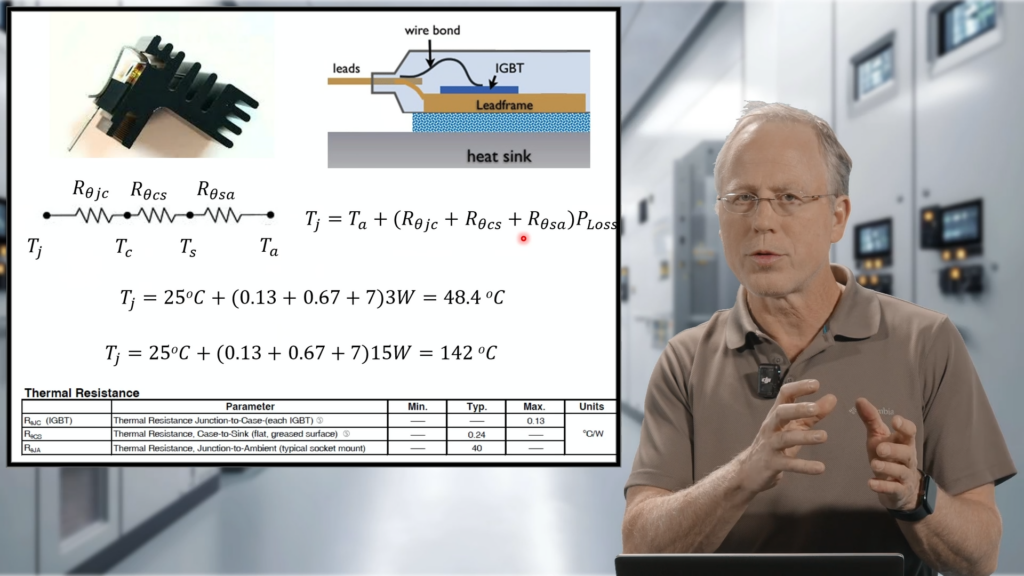
Intentional Design with Industry-Aligned, Experiential Assignments
Another strength of this course is the incorporation of industry-aligned assignments that mirror real engineering work. Students complete two major assignment types. The first uses Multisim, a live online circuit simulator that builds technical fluency with concepts learned. The second uses role-based design assignments, where students adopt an engineer’s perspective to evaluate layouts, justify converter choices, propose thermal solutions, or analyze switch-mode power supply behavior.
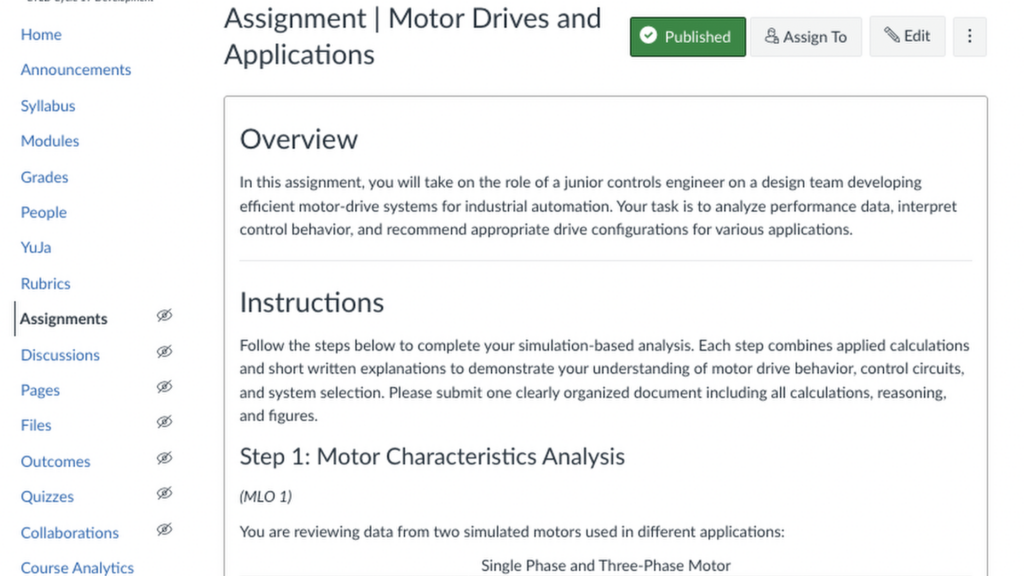
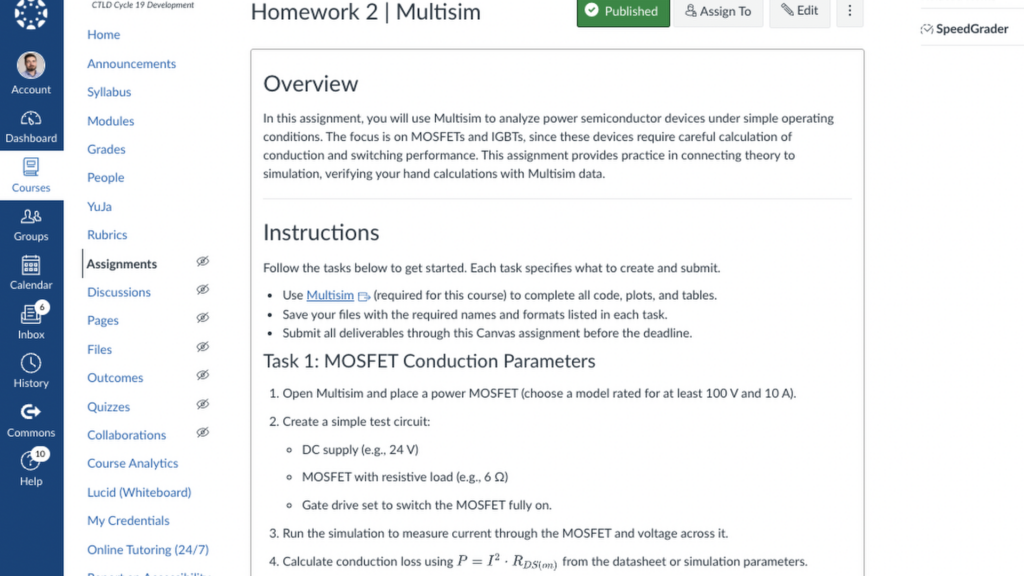
Rather than “plug-and-chug” tasks, these assignments ask students to make decisions, explain trade-offs, and communicate engineering reasoning. This experiential approach helps students build confidence with tools and thought processes that are applicable in internships and industry roles.
Authentic Engineering Practice Through Multisim
Multisim is integrated throughout the course to connect theory to real system behavior. Students simulate switching waveforms, compare topologies, model parasitics, estimate loss and thermal limits, and explore how design choices affect performance. Working in Multisim provides students with a flexible environment to test ideas that would otherwise be difficult or impractical to prototype early in the design process. By the end of this course, students will have experience with complex concepts and practice analyzing, validating, and refining designs the way professional power engineers do.
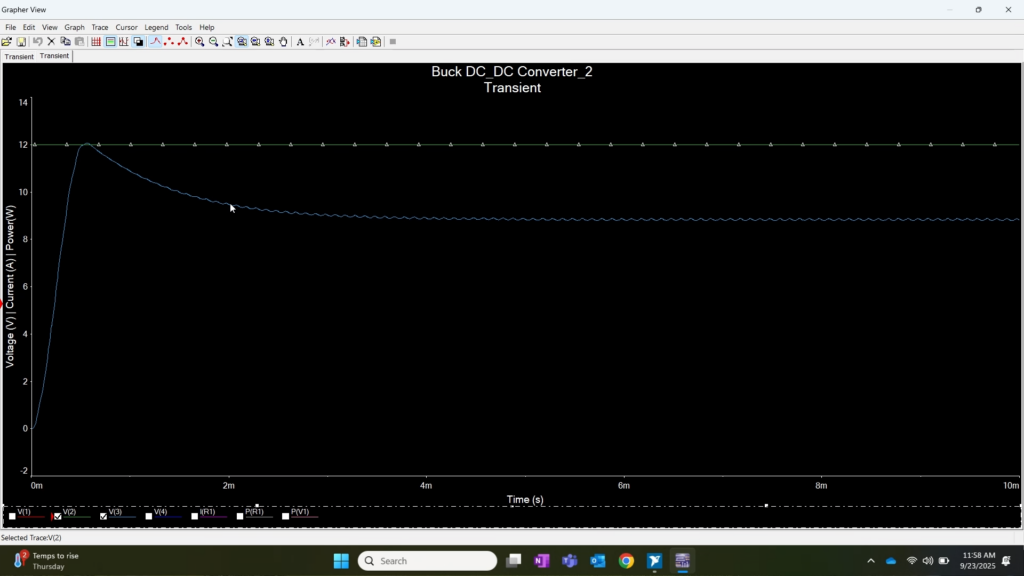
Using circuit-simulation software also helps students build engineering intuition to better understand how small changes ripple through a system. This helps explain why certain design choices succeed or fail. It turns abstract theory into something students can test, observe, and reason about.
Partnering for Continuous Improvement in Teaching and Learning
A significant factor in the success of this and similar projects is the support and funding from the Office of Online Learning (OOL), which has been instrumental in enhancing the quality of our online educational endeavors. OOL’s support and contributions have empowered faculty members to innovate and create a more enriching educational environment for all. Please visit the Office of Online Learning for more information about all that they are doing to help MSU Denver faculty members and students.
Want to get involved?
One way to find help with implementing student supports in your course is the CTLD Course Development Cycle. This is an intensive, but rewarding, process where an instructional designer will work with you over the course of several months to identify course objectives, develop learning activities, create a user-friendly course, record high-quality multimedia content, and much more.
For more information on the CTLD Development Cycle, as well as how to apply to join, please see our CTLD Course Development Cycle spotlight.
Have Questions?
Want help on this or other teaching and learning topics? Please visit us for drop-in support (10am-3pm, M-F) or try one of our self-help tutorials.
Sources
- Feldstein, A., Martin, M., Hudson, A., Warren, K., Hilton, J., & Wiley, D. (2012). Open textbooks and increased student access and outcomes. European Journal of Open, Distance and E–Learning.
- http://libguides.cu-portland.edu/OER
- http://libraryguides.goucher.edu/oer
- Average Cost of College Textbooks Infographics 2022 – BookScouter Blog