
Last updated on February 25, 2026
Written by the CTLD Instructional Media Team
Each semester, the Center for Teaching, Learning and Design partners with MSU Denver faculty across the university to build meaningful, high-quality online learning experiences. These collaborations range from reimagining existing courses to full development projects built from the ground up. During this process, faculty work closely with the CTLD Instructional Media team to create engaging multimedia that supports learning, reduces cognitive barriers by segmenting concepts and content, and reflects the best of what online education can offer. As part of this work, the media team identifies three courses each semester that exemplify excellence in media design, innovation, and the creative possibilities of working with the CTLD Instructional Media team. For Fall 2025, the selected courses come from three distinct disciplines: Hospitality, Economics, and Business – yet they all demonstrate how thoughtful multimedia design can elevate learning across modalities.
Contents
Video Spotlight
[Length 7:48, CC Available]
Showcase Examples
Cannabis in the Kitchen (NONC SOH)
Cannabis in the Kitchen, highlights the power of immersive, experiential media in an online culinary environment. Working with subject-matter expert Shannon Donnelly, the team produced 14 instructional videos exploring water-soluble cannabinoids, butter and oil infusions, the science of cannabis-based ingredients, as well as recipe demonstrations. Through both in-studio filming and on-location shoots—including a facilitated tasting panel at a local cannabis lounge and cooking demonstrations in MSU Denver’s Hospitality facilities—the course brings students directly into real-world spaces where cannabis hospitality is rapidly evolving.
This course is an especially strong example of the Personalization Principle of Richard Meyer’s Multimedia Theory of Learning. Shannon’s warm, encouraging on-screen presence helps students feel comfortable engaging with complex and sometimes unfamiliar material. The Multimedia Principle is equally central: students observe real chefs, authentic kitchen workflows, and live demonstrations rather than abstract descriptions. This pairing of narration with rich visual context helps students make meaningful connections between culinary concepts and practical application.
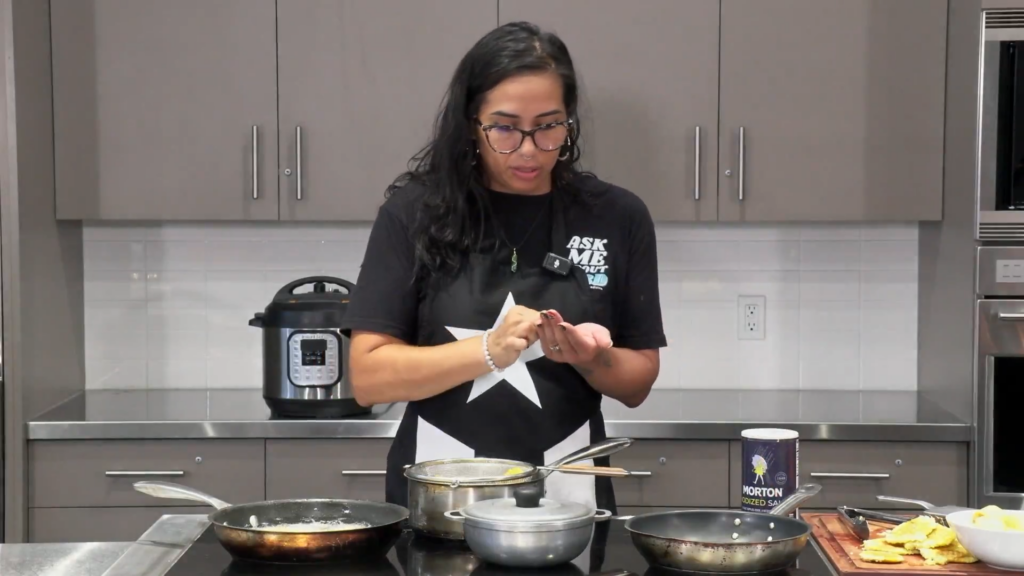
Coordinating multiple chefs, securing filming locations, and managing long production days was a significant undertaking, but the project team maintained a collaborative, flexible workflow. The final product is vibrant, forward-thinking, and deeply aligned with the emerging world of cannabis hospitality and tourism. Students not only learn key techniques but also develop insight into a growing industry that blends creativity, science, and entrepreneurship.
Global Economic History – The Origins of Growth (ECO 1776)
ECO 1776, developed by Chandler Reilly in partnership with the CTLD Instructional Design Media team, invites students to explore how economic reasoning helps explain human behavior across a wide range of historical and cultural contexts. Rather than presenting economics as a collection of abstract models, the course guides learners through vivid, real-world scenarios that demonstrate how incentives, information, and property rights shape decisions. The tone throughout the media is clear, conversational, and intentionally supportive—encouraging students not to “let the math scare you” as they are guided through challenging subject matter illuminated by unique historical examples.
Reilly’s videos use unexpected and compelling examples to illustrate how economic logic structures conflict, negotiation, and coordination. In the segment on the Raid or Trade Framework, students learn how groups such as Native Americans and European settlers evaluated the “costs of fighting,” “gains from fighting,” and “costs of negotiation” when determining whether to engage in conflict or bargain peacefully. Chandler breaks down a seemingly complex formula on-screen and explains the meaning behind each variable clearly. The course then applies the Coase Theorem to the institution of wife sales in Industrial Revolution-era England, showing how bargaining was constrained by legal rules that left married women with “no property rights of their own.” Finally, the Benge oracle of the Azande is analyzed through a coordination game, where characters like Greta and Wayne illustrate how rituals help communities avoid the “worst of all worlds” outcome when both parties choose to stand tall. These examples help students see the reach of economic reasoning far beyond markets.
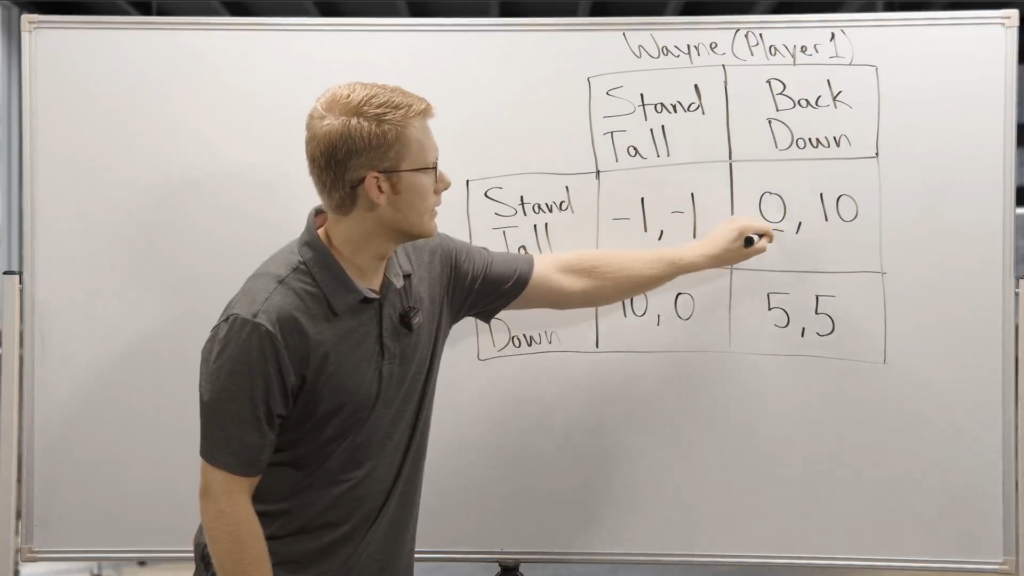
Throughout these videos, the instructional media design reinforces the clarity and structure of Reilly’s explanations. Each concept is broken down “piece by piece,” aligned with Mayer’s Segmenting Principle, while uncluttered visuals and focused narration support the coherence principle by removing extraneous information. Conversational delivery, including approachable reassurances and worked examples, strengthens Personalization, helping students feel guided through complex reasoning rather than lectured at. Together, these media choices ensure that ECO 1776 remains both analytically rigorous and deeply accessible, illustrating how thoughtful instructional design can bring abstract economic theories vividly to life.
Introduction to Business (BUS 1850)
Our final showcased course represents a large-scale collaborative effort across the College of Business. For BUS 1850: Introduction to Business, the CTLD instructional design and media teams partnered with a wide range of subject-matter experts to produce thirty-eight original videos spanning marketing, management, accounting, finance, CIS, and business ethics. Designed for first-year students, the course introduces essential business concepts while building connections to real-world scenarios.
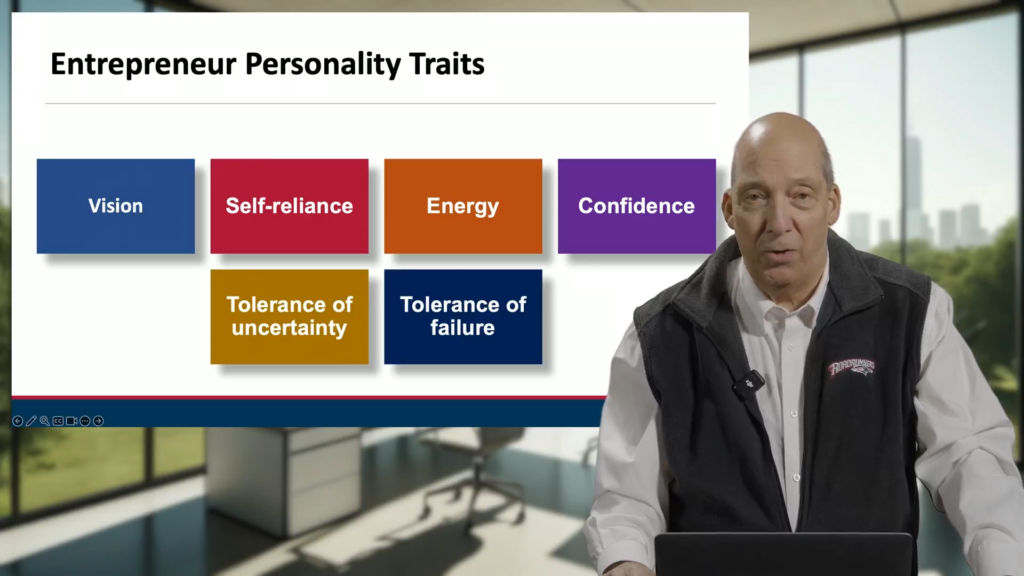

The design of the video materials intentionally integrates a suite of Mayer’s multimedia learning principles. The Multimedia Principle ensures visuals and narration work together to reinforce meaning, while the Modality Principle uses spoken explanation rather than dense on-screen text to reduce cognitive strain. The Coherence Principle helped guide slide design by limiting unnecessary detail, and Signaling directs learners toward key takeaways through visual emphasis and clear organizational cues. The Redundancy Principle is also adhered to by avoiding duplicated narration and written text, keeping the cognitive load as light as possible for new business learners.
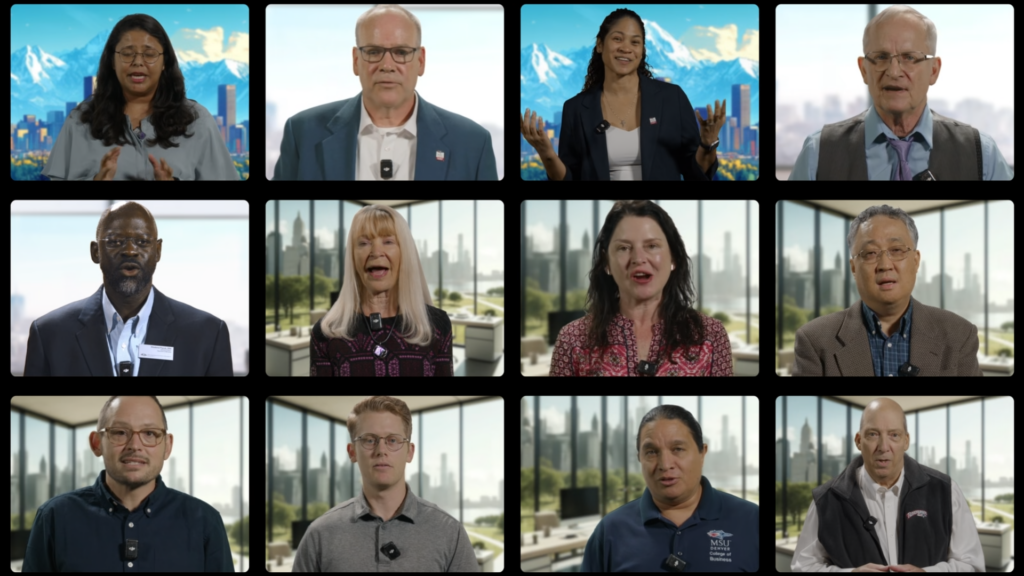
Coordinating so many SMEs was a major challenge, and the team encountered diverse presentation styles ranging from highly scripted to spontaneous. Through substantial editing, coaching, and alignment work, the media team harmonized these voices into a consistent, pedagogically strong set of videos. The result is a well-structured, highly engaging introduction to business that reflects the field’s interdisciplinary nature. Students benefit not only from foundational content but also from exposure to multiple perspectives within the college.
Conclusion
Across all three courses, the CTLD media team demonstrated the power of high-quality multimedia to support learning in diverse disciplines. By strategically applying Richard Mayer’s multimedia learning principles, each course reduces cognitive load, strengthens student engagement, and enhances instructional clarity. Whether recording in a professional kitchen, building dynamic visualizations of economic frameworks, or supporting multi-departmental collaboration, the CTLD team brings instructional expertise, production skills, and creative problem-solving to every project.
These courses showcase the potential of thoughtful media design and the dedication of our faculty. By continuing to partner closely with instructors and applying research-based multimedia strategies, the CTLD ensures that MSU Denver students have access to engaging and intellectually rich online learning experiences.
Partnering for Continuous Improvement in Teaching and Learning
A significant factor in the success of this and similar projects is the support and funding from the Office of Online Learning (OOL), which has been instrumental in enhancing the quality of our online educational endeavors. OOL’s support and contributions have empowered faculty members to innovate and create a more enriching educational environment for all. Please visit the Office of Online Learning for more information about all that they are doing to help MSU Denver faculty members and students.
Want to get involved?
One way to find help with implementing student supports in your course is the CTLD Course Development Cycle. This is an intensive, but rewarding, process where an instructional designer will work with you over the course of several months to identify course objectives, develop learning activities, create a user-friendly course, record high-quality multimedia content, and much more.
For more information on the CTLD Development Cycle, as well as how to apply to join, please see our CTLD Course Development Cycle spotlight.
Have Questions?
Want help on this or other teaching and learning topics? Please visit us for drop-in support (10am-3pm, M-F) or try one of our self-help tutorials.