
Last updated on September 8, 2026
The Course Information Module is a template module included in every Canvas Course Shell as part of the MSU Denver Canvas Blueprint. This module is designed to be used in conjunction with the Syllabus to present important information about your course.
The Course Information Blueprint Module contains a collection of template pages designed with instructional design principles in mind, such as priming, chunking, and alignment. You can use these pages by replacing the bracketed description text with your specific course information.
In addition to the page templates, the Course Information Module comes with a few discussion boards meant to help increase student-to-student interaction in the course. These can be especially helpful with online asynchronous courses where students don’t interact with their peers often.
For more information about what else is included in the Canvas Blueprint and the instructional design principles behind it, see our spotlight, MSU Denver Canvas Blueprint.
Directions
[Length 6:32, CC Available]
What is Included in the Course Information Module
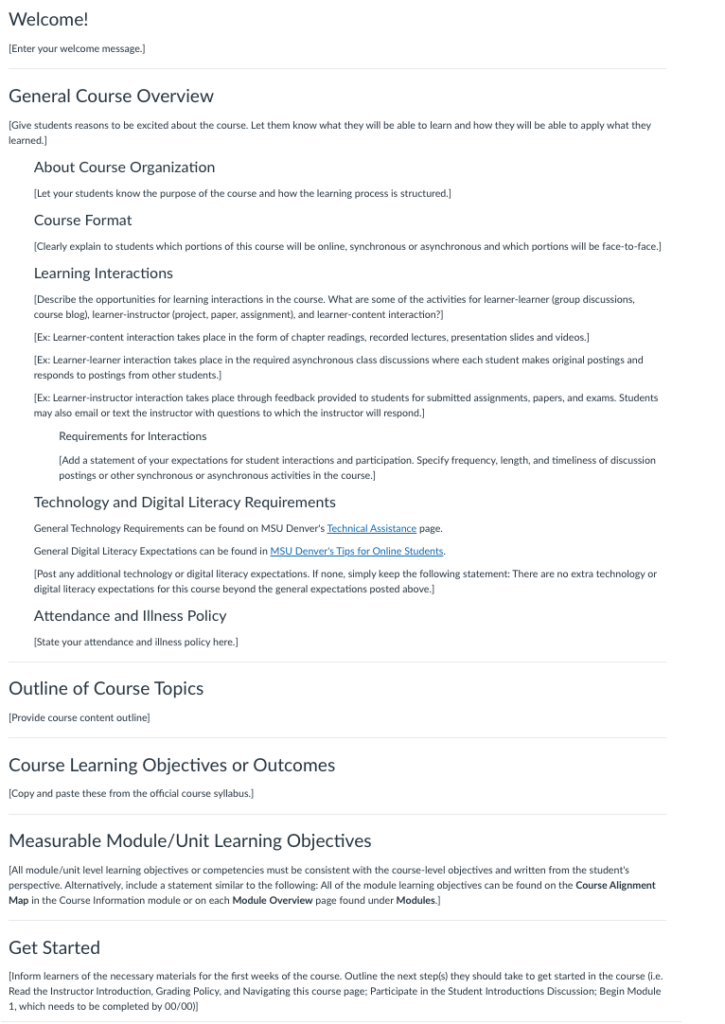
- Overview (Read Me First): Use this page to enter information about your course organization and format, expected learning interactions, technology requirements, attendance policy, and to outline your course topics and learning objectives.
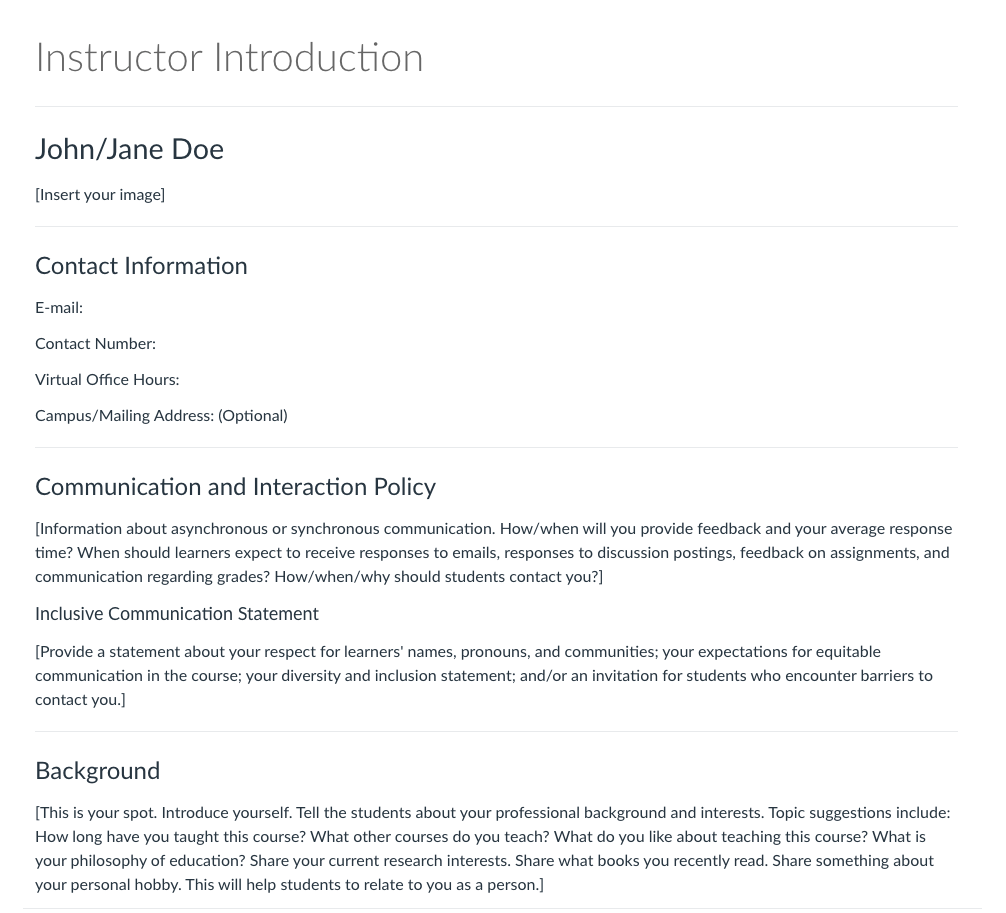
- Instructor Introduction: Use this page to introduce yourself and provide your communication and interaction policy.
- Include a video on this page to add a more personal touch to the course.
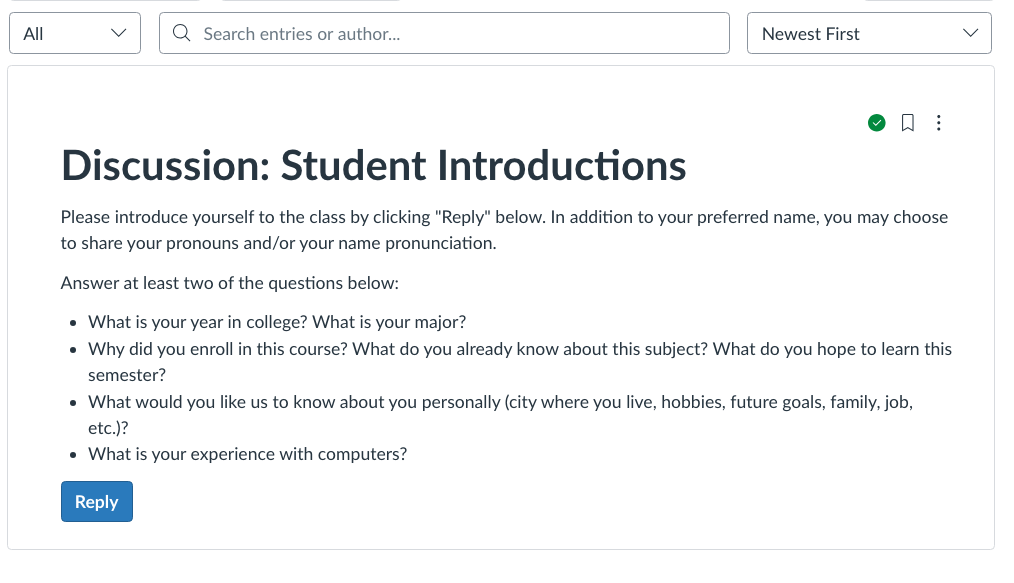
- Discussion: Student Introductions: This discussion is a place for students to introduce themselves to you and their peers. You can keep the questions the same, or edit them to align more specifically to your course.
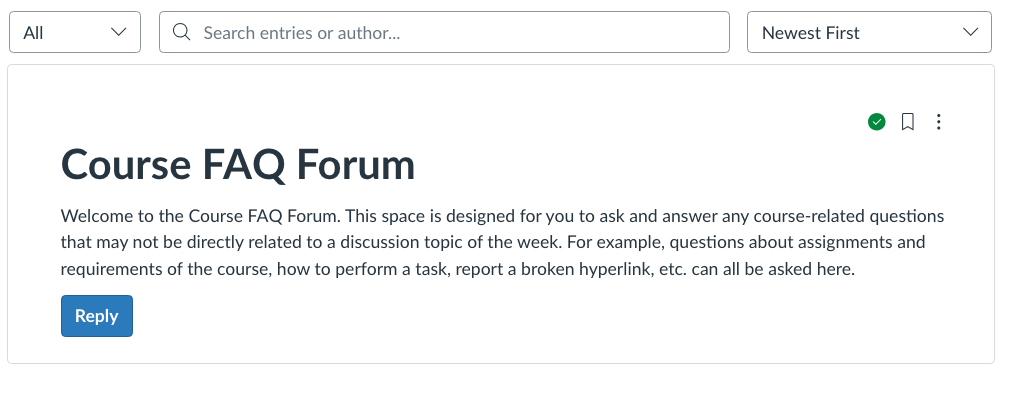
- Course FAQ Forum: This is a discussion board designed to be a central location for students to ask course-related questions throughout the semester. It’s a good place to continuously check in case students post any questions here.
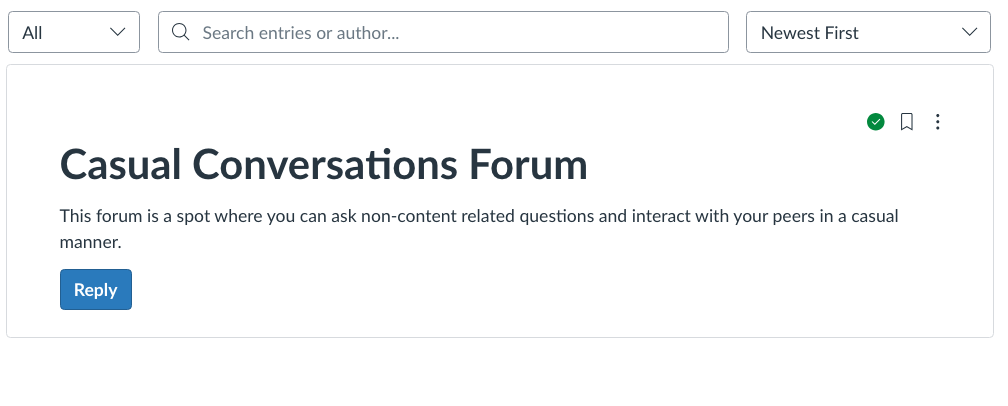
- Casual Conversations Forum: This discussion board serves as a central location for students to ask non-content related questions and interact with their peers. This can help foster a sense of community, especially for online courses.
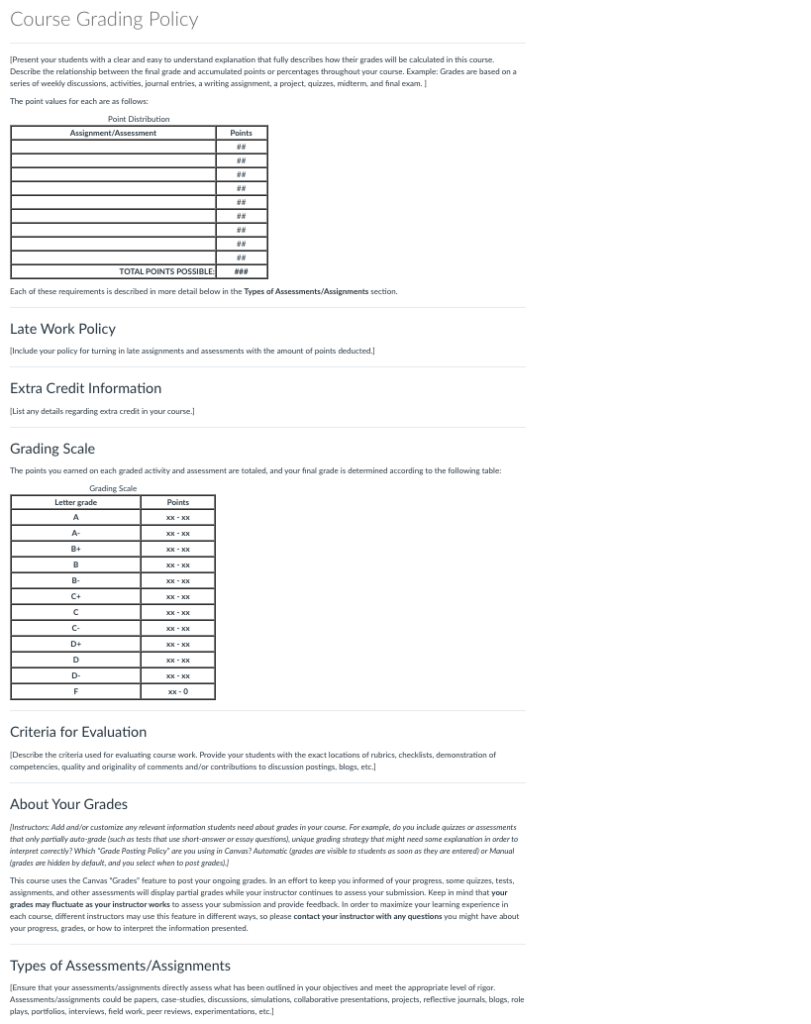
- Course Grading Policy: Use this page to outline how students’ grades will be calculated, any specific grading policies (such as late work), how you will grade and provide feedback, and the types of assessments/assignments students should expect.
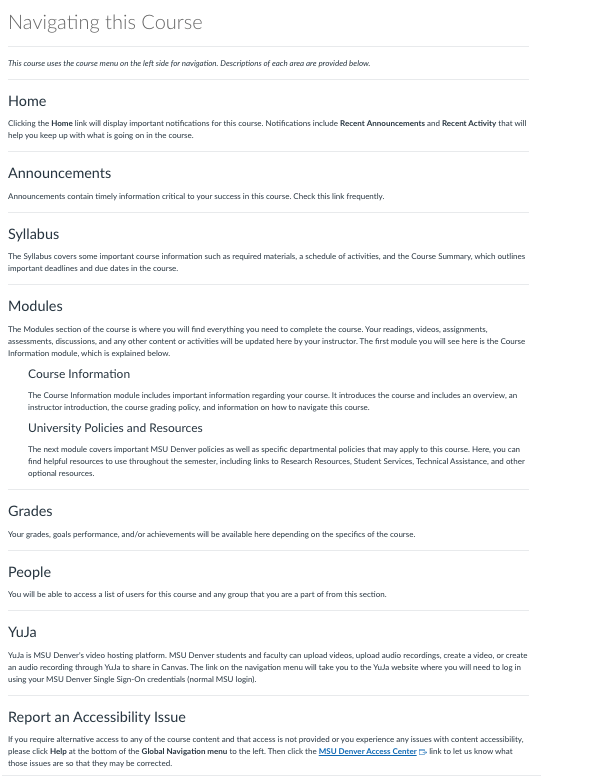
- Navigating the Course: This page describes how to navigate Canvas to work through your course. If you follow the Canvas Blueprint, you shouldn’t have to edit or change this page.
- If your course has any additional Canvas integration tools, such as ProctorU, or if Modules aren’t your main/only way students access course materials, add that information here.
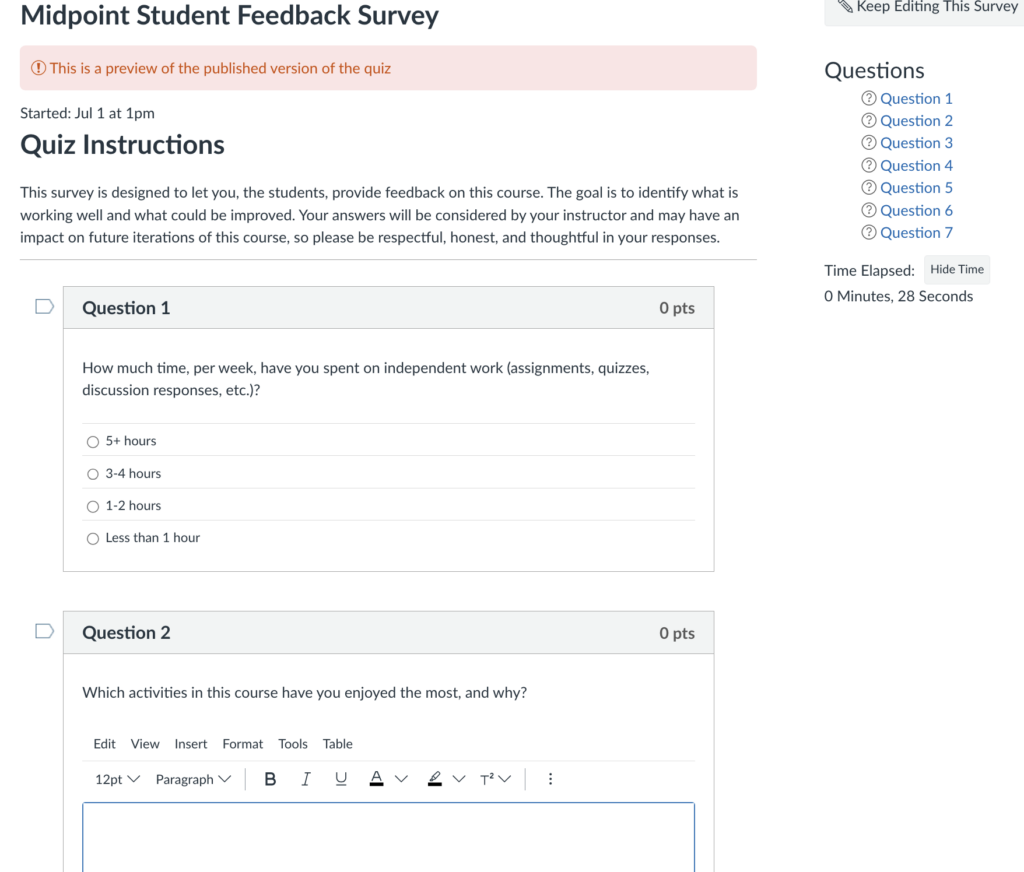
- Midpoint Student Feedback Survey: This is an ungraded survey designed to allow students an opportunity to provide feedback for the course. You can move this survey to a module halfway through your course, or remind students to fill it out through an announcement.
- See our tutorial, Create and Edit Classic Quizzes, for guidance on how to edit the questions or settings in this survey.
- See our tutorial, Create and Edit Classic Quizzes, for guidance on how to edit the questions or settings in this survey.
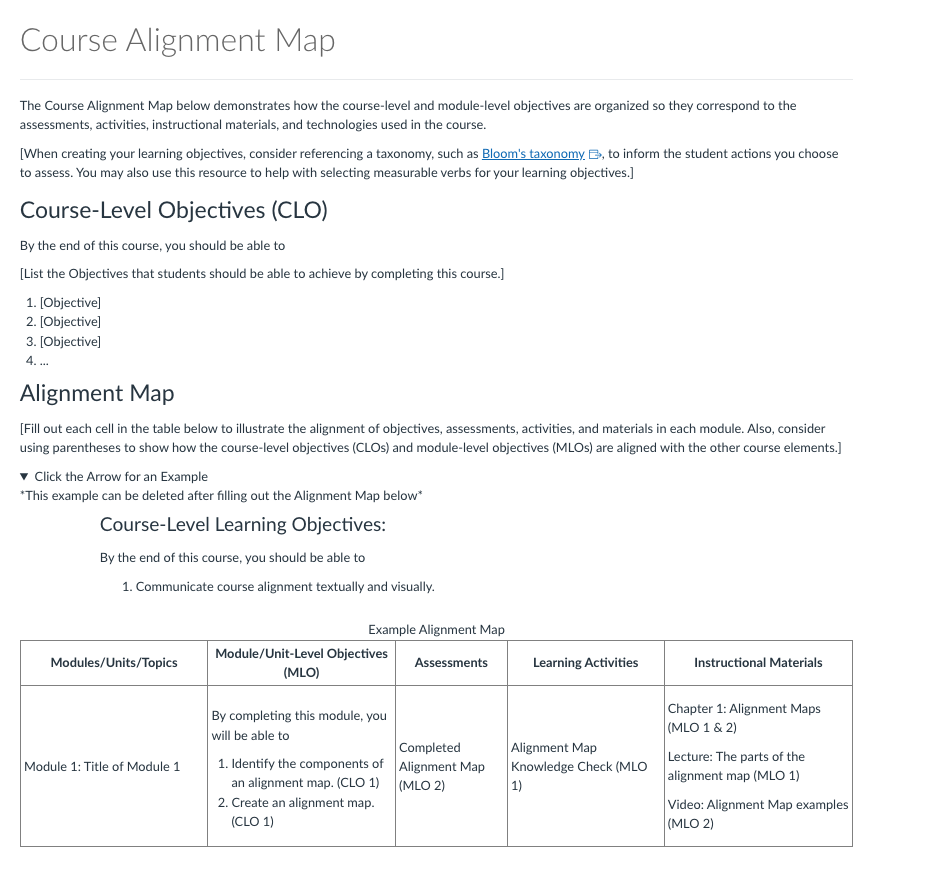
- Course Alignment Map: Use this table to outline the alignment between your modules, learning objectives, assessments, learning activities, and instructional materials.
- An alignment map not only helps students understand the purpose behind each learning material but also can help you organize your course in a cohesive way and ensure each learning objective is met.
Edit the Course Information Module
- Go to MSU Denver’s Faculty and Staff Hub.
- Click Quick Links on the top right of the page.
- Click Canvas from the menu options that appear.
- Log in to your Canvas Account.
- Select the Course you’d like to work in.
- Click Modules in the left-hand course navigation menu.
- Scroll down to the Course Information Module.
- Click the More Options (3 dots) icon to the right of the Module title.
- Select Edit from the dropdown menu.
- Enter your Course Name after “Course Information” in the Module Name text field.
- Ex. Course Information – Psychology 1001
- This helps identify this as the Course Information Module with your course content in it for when you copy your course for a new semester.
- Click Save.
Edit Template Pages
- Click the name of the page you wish to edit.
- Click Edit in the top right corner.
- Replace bracketed text with your Course Information.
- Take note of what the text says before deleting, as it will provide a description of what to include.
- Click Save at the bottom right of the page when ready.
- Repeat steps for all pages.
Edit Discussion Boards
- Click on a discussion (indicated by comment boxes) to edit it.
- Click the three dots (more options) icon to the far right of the discussion.
- Select Edit from the dropdown menu.
- Edit the discussion as desired.
- See our tutorial, Edit a Discussion in Canvas, for more guidance.
- Click Save at the bottom right of the screen.
- Repeat steps 17-21 for each discussion.
Move Midpoint Student Feedback Survey
- Click the three dots (more options) icon to the right of the Feedback Survey.
- Select Move To from the drop-down menu.
- Select the Module you would like to move the survey to from the drop-down menu under Modules in the right-side panel that appears.
- Select the Position within the module to place the survey from the second drop-down menu.
- If you select “Before” or “After,” you will need to select an item in that Module from a third drop-down menu.
- Click Move in the bottom right-hand corner.
- Alternatively, click the eight dot array to the left of the page to drag and drop the quiz to a new location.
Note: For guidance on the other template provided in the MSU Denver Blueprint, view our tutorials, Use the Syllabus Tool and Blueprint: Sample Module Overview.
Have Questions?
Need additional support on this or other teaching and learning topics? Please visit us for drop-in support or try one of our self-help tutorials.
Ready to take your teaching to the next level? Opt into our Connections with CTLD newsletter