
Last updated on September 9, 2026
By the CTLD Instructional Media Team
Each semester, the Center for Teaching, Learning, and Design partners with MSU Denver faculty across the university to build meaningful, high-quality online learning experiences. These collaborations range from reimagining existing courses to full development projects built from the ground up. During this process, faculty work closely with the CTLD Instructional Media team to create engaging multimedia that supports learning, reduces cognitive barriers by segmenting concepts and content, and reflects the best of what online education can offer. As part of this work, the media team identifies three courses each semester that exemplify excellence in media design, innovation, and the creative possibilities of working with the CTLD Instructional Media team. For Spring 2026, the selected courses come from three distinct disciplines: Environmental Science, English, and Philosophy, yet they all demonstrate how thoughtful multimedia design can elevate learning across modalities.
Video Spotlight
[Length 10:24, CC Available]
Showcase Examples
ENG 1010
The media produced for ENG 1010: Composing Arguments represents a broad collaborative effort to connect students with the people and services available to support their academic success. Cody Chambless worked as the subject matter expert with instructional media developer Tim Wright. They coordinated contributions from several groups across MSU Denver, like the Writing Center, Auraria Library, and the C2Hub, to create a collection of practical resource videos for first-year writers.
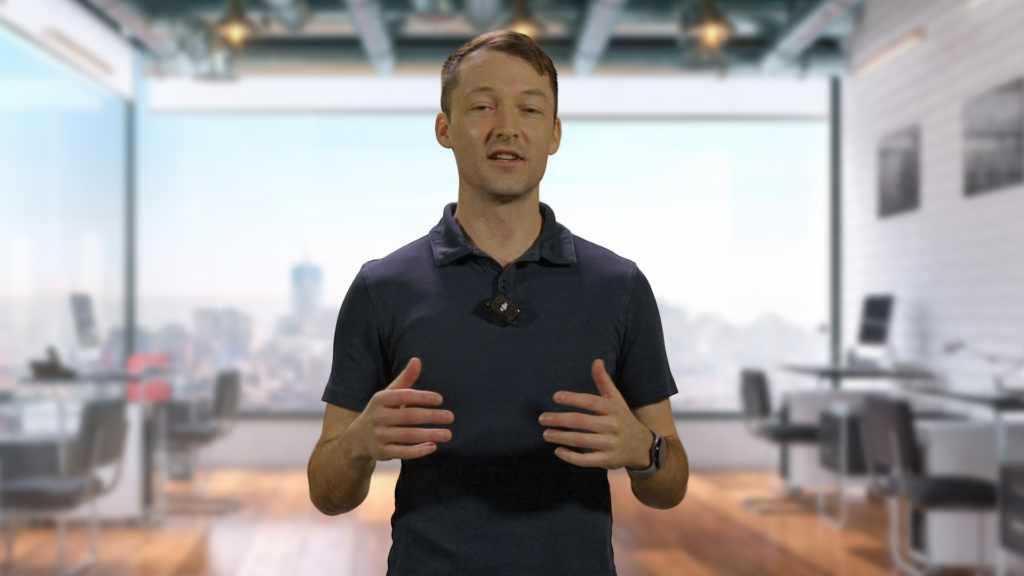
Staff from the C2Hub and Writing Center introduced students to services that can help them develop ideas, strengthen their writing, and navigate the challenges of college-level coursework. In these videos, students learn about these essential resources directly from the staff providing them, encouraging them to seek help and familiarizing them with the process. These videos support the student’s professional development in addition to their academic success.
Cody Chambless and Tim Wright also coordinated with librarians from the Auraria Library, who demonstrated how students can use the SIFT method to evaluate information encountered during research. Finding sources and weighing their credibility is a fundamental skill for all students, and these videos provide practical demonstrations of this process in several contexts. Together, the contributions of faculty and staff from across the university provide ENG 1010 students with an accessible network of writing, research, and academic support.

These resources all supplement Cody Chambless’s unit and assignment overview videos. These provide students with clear, approachable introductions to upcoming coursework. By explaining expectations in a warm, conversational manner, Chambless applies Mayer’s Voice Principle, providing students with personal guidance from their instructor rather than a formal set of instructions written out in Canvas. The videos also embody the Pre-Training Principle by introducing essential terms, objectives, and assignment components before students begin more complex readings and activities. This preparation scaffolds new ideas for students and helps them approach each assignment with confidence and a clear understanding of expectations.
PHI 3510
In PHI 3510: Phenomenology, Dr. Sam Munroe partnered with instructional media developer Ben Cornish to create content guiding students through the foundational ideas of classical phenomenology. Throughout the course, Dr. Munroe introduces phenomenology as the study of lived experience and helps students approach questions about consciousness, perception, and our relationship with the world.
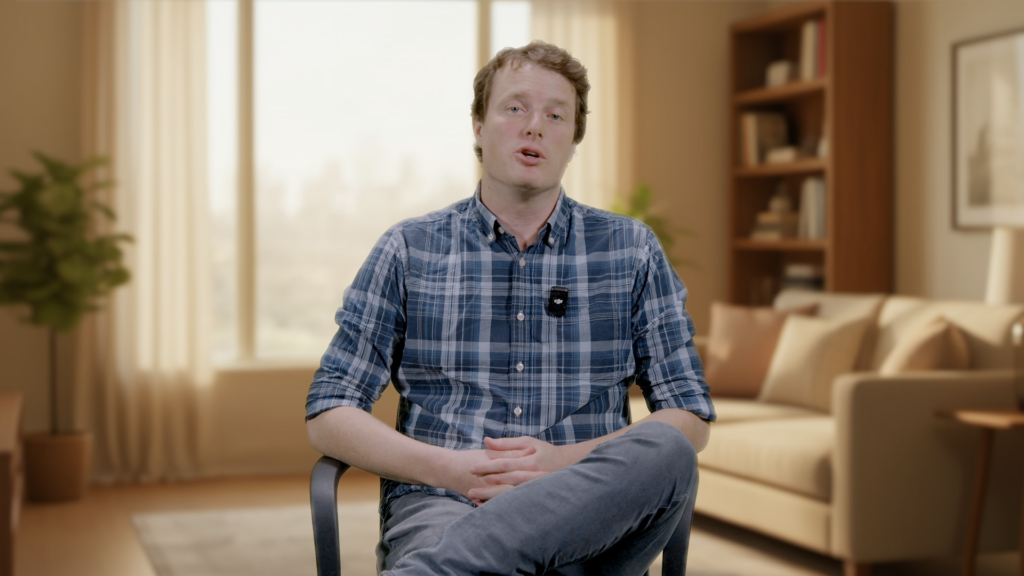
Teaching philosophy in an asynchronous online environment presents unique challenges, as many of its most important concepts are highly abstract and traditionally explored through dialogue, reflection, and shared discussion.
Ben Cornish added purposeful animation to Dr. Munroe’s lectures, enabling students to visualize these abstract ideas. In one video, an animated table demonstrates Husserl’s observation that we can experience an object from only one perspective at a time. As the table rotates, students can see how each view reveals part of the object while implying perspectives that remain hidden. This provides students with a concrete illustration of intentionality and perception.
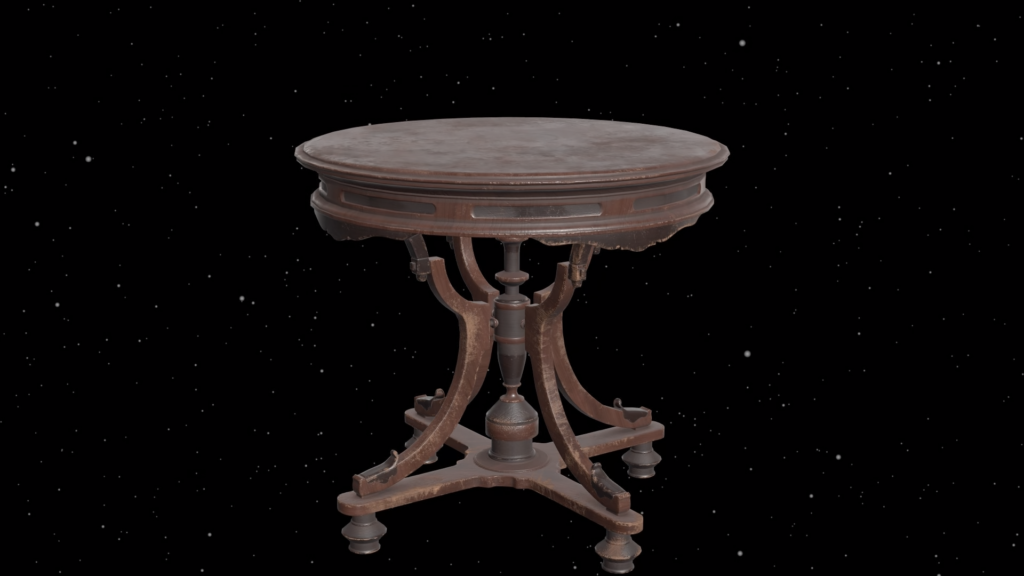
The animations continue throughout the course, translating other difficult philosophical concepts into visual experiences.
Dr. Munroe narrates another sequence, using animated musical notation to illustrate Husserl’s theory of internal time-consciousness. Notes appear and progress in time with the narration, demonstrating how present experience is shaped by both what has just occurred, or retention, and what we anticipate will occur next, or protention. Key terms and diagrams likewise appear at the moments Dr. Munroe discusses them, applying the Temporal Contiguity and Signaling Principles articulated by Dr. Richard Mayer. These callouts direct the students’ attention toward essential information without overwhelming them.
Together, Dr. Monroe and Ben Cornish combined synchronized visuals, focused animation, and the instructor’s conversational delivery to apply Mayer’s Multimedia, Temporal Contiguity, Voice, and Personalization Principles. The result is a cohesive series of videos that transforms difficult concepts from classical phenomenology into accessible visual experiences while preserving the intellectual depth of the subject.
ENV 1200 & 3350
Finally, the CTLD worked with Dr. Sarah Schliemann on two Environmental Sciences courses – ENV 3350: Climate Change Solutions and ENV 1200: Intro to Environmental Science. Additionally, Dr. Sara Jackson Schumate and Dr. Rebecca Bingham-Byrne contributed to ENV 3350 and 1200, respectively. Along with the CTLD Instructional Media Team – represented by Todd Wolfe and Tanner Wilde – they produced a media library combining focused lectures, guest interviews, and on-location recordings featuring voices from across the university and beyond.
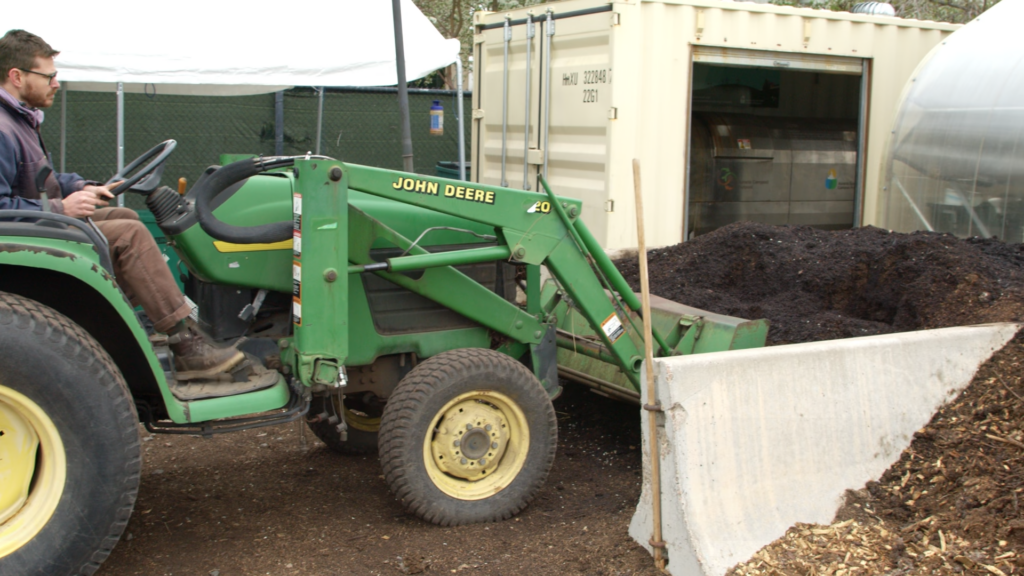
On-location videos about campus composting, solar panels, and wastewater treatment bring students into settings where climate solutions are being practiced, like Auraria’s composting facility or a wastewater treatment plant in Broomfield. By pairing the instructors’ explanations with relevant environments and real-world examples, these videos apply Mayer’s Multimedia and Modality Principles while combining the information with the visual experience of a real-world, professional environment that would be difficult to reproduce through text or slides alone. Signaling and the Spatial and Temporal Contiguity Principles further support comprehension by presenting key terms and related visuals together at the moments students need them.
Todd Wolfe and Tanner Wilde worked with Drs. Schliemann, Schumate, and Bingham-Burne to produce a series of studio interviews, broadening the course through conversations with experts and former students. Their perspectives deepen students’ engagement with topics including natural climate solutions, environmental justice, and the future of climate action. The conversational format applies Mayer’s Voice and Personalization Principles, presenting new information as a dialogue between people actively studying and working on these issues, as well as unique perspectives on how an education at MSU Denver can enrich students’ lives and careers.
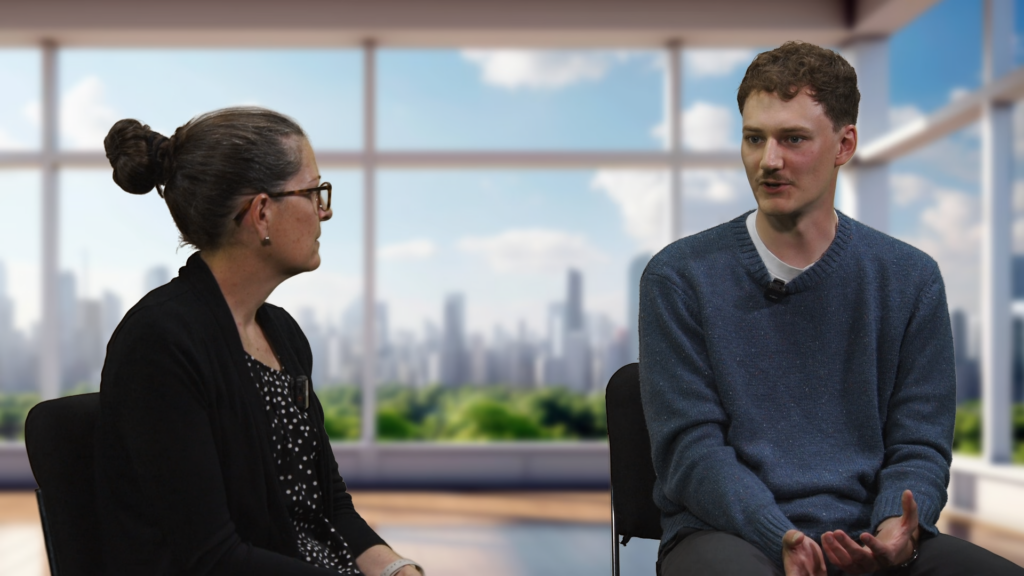
Alongside thoughtful implementation of crucial multimedia learning principles, the varied settings, speakers, and formats create a cohesive learning experience in which students not only learn about proposed climate solutions, but also hear from the people working on them, and visit the places where those solutions are being applied.
Conclusion
Across all four courses, the CTLD media team demonstrated the power of high-quality multimedia to support learning in diverse disciplines. By strategically applying Richard Mayer’s multimedia learning principles, each course reduces cognitive load, strengthens student engagement, and enhances instructional clarity. Whether recording in a composting facility, building dynamic visualizations of philosophical concepts, or supporting academic and professional development through campus resources, the CTLD team brings instructional expertise, production skills, and creative problem-solving to every project.
These courses showcase the potential of thoughtful media design and the dedication of our faculty. By continuing to partner closely with instructors and applying research-based multimedia strategies, the CTLD ensures that MSU Denver students have access to engaging and intellectually rich online learning experiences.
Partnering for Continuous Improvement in Teaching and Learning
A significant factor in the success of this and similar projects is the support and funding from the Office of Online Learning (OOL), which has been instrumental in enhancing the quality of our online educational endeavors. OOL’s support and contributions have empowered faculty members to innovate and create a more enriching educational environment for all. Please visit the Office of Online Learning for more information about all that they are doing to help MSU Denver faculty members and students.
Want to get involved?
One way to find help with implementing student supports in your course is the CTLD Course Development Cycle. This is an intensive, but rewarding, process where an instructional designer will work with you over the course of several months to identify course objectives, develop learning activities, create a user-friendly course, record high-quality multimedia content, and much more.
For more information on the CTLD Development Cycle, as well as how to apply to join, please see our CTLD Course Development Cycle spotlight.
Have questions?
Want help on this or other teaching and learning topics? Please visit us for drop-in support, or try one of our self-help tutorials.